

For years, nuclear war felt like history. A closed chapter. It was something my parents, our parents, worried about – tied to black-and-white photos of mushroom clouds. But lately, that uneasy feeling: the warning signs of nuclear war are back.
It’s not because the leaders of nuclear power countries are screaming threats every day. It’s because it looks like the world has stopped being careful.
We are less patient. Less interested in hitting the brakes. Wars drag on, and powerful countries are testing limits that used to be untouchable.
The fear today isn’t dramatic. It’s quiet. And that is exactly why I feel it is dangerous.
When Power Matters More Than Safety – We Get That!
History tells us an uncomfortable truth: leaders who feel cornered often escalate conflict.
When public support falls, approval ratings drop – external enemies become useful, strength is performed. When economies suffer, wars distract.
It changes the subject. It turns criticism into patriotism.
We’ve seen this movie before.
Argentina’s generals invaded the Falklands when they were losing control at home. Russia escalated in Ukraine during an internal strain. Pakistan does it every time its military Head wants to enjoy the power for a longer period.
These aren’t emotional outbursts. They are calculated risks.
We saw the same logic play out with Venezuela.
The Venezuela Distraction
As criticism grew over economic policy and global influence, Washington intensified pressure on Caracas. Sanctions hardened. Opposition figures were openly backed.
Then came a dramatic military operation that resulted in the capture of Venezuela’s president — justified as a law-enforcement action, but widely criticized as a violation of sovereignty.
The logic, officially, was about democracy and security. Unofficially, it was impossible to ignore Venezuela’s massive oil and rare earth metal reserves and its importance in a changing global energy map.
The irony is that even major oil companies later admitted Venezuela’s infrastructure is old, damaged, and incredibly expensive to fix. The economic prize was far less clear than the political message.
That’s the danger zone: when symbolic power matters more than practical outcomes.
As criticism over Venezuela mounted, attention seemed to drift elsewhere — Greenland.
Why Greenland Isn’t a Joke
To the public, the idea of “buying” Greenland sounded like a joke. To Europe, it was a threat.
Greenland represents something bigger: Arctic control, rare earth minerals, future shipping routes as ice melts, and military positioning in a warming world.
Talking casually about acquiring territory — even rhetorically — breaks a rule that has kept relative peace since World War II.
That rule is simple: borders are not negotiable.
French Army General Nicolas Richoux recently issued a warning that should make every American’s blood run cold:
“Greenland is the red line. If the US invades, they stop being systemic adversaries — they become enemies. If the US attacks Greenland, we must fight the Americans.”
Italy’s Meloni is already echoing this sentiment, referring to military boycotts and sanctions against the US. For the first time since 1945, the Western world is talking about shooting at each other. When the French start preparing for war against the Americans over a sheet of ice, the “shared interests” of the West are officially dead.
Europe’s Response Wasn’t Anger — It Was Alarm
France, Germany, and Poland responded together through the Weimar Triangle, and their message was unusually blunt.
Greenland is not for sale. Military solutions are off the table. Sovereign nations will not be treated as assets.
But what really stood out was their tone. This wasn’t posturing. It wasn’t chest-thumping.
It sounded like concern.
European leaders also warned against pushing the world into rival camps through sanctions and punishment alone. They argued that dividing the global economy into hostile blocks — G7 versus BRICS — increases mistrust and reduces communication.
And in a nuclear world, fewer conversations mean more risk. This increases the probability of a nuclear war.
Nowhere is that clearer than in Ukraine.
Wars That Don’t End Become More Dangerous Over Time
What was once expected to be a short, sharp conflict has turned into a long war with no clear exit.
Russia’s deployment of advanced Oreshnik hypersonic missile systems in Belarus has raised quiet alarms across Europe. Nuclear language has returned — not as a threat, but as a reminder.
These are the warning signs that I am worried about of nuclear war.
The longer a war drags on, the more escalation becomes normal. And once escalation feels normal, mistakes become easier to make.
The same logic applies in East Asia: China – Taiwan
China’s pressure on Taiwan isn’t about emotion. It’s about credibility and control. The United States sees Taiwan as a red line. Japan sees it as central to its own security. Everyone insists they want stability — yet military drills, counter-moves, and warnings continue.
Nobody plans a war. But nobody fully controls how one might start.
The Middle East: Where Everything Connects
If there is one place where global risk multiplies, it’s the Middle East.
Conflicts there don’t stay contained. Israel, Gaza, Hezbollah, Iran, US forces across the Gulf — each tension feeds another.
A strike in one place triggers responses somewhere else. Internal protests spill into foreign policy decisions. Proxy groups blur responsibility.
The problem isn’t a single conflict. It’s how many of them overlap.
When systems overlap, control weakens. Big warning signs of nuclear war.
South Asia’s Quieter, More Unsettling Risk
South Asia doesn’t dominate headlines, but it deserves attention.
The Yunus Paradox: In Bangladesh, the world is still blinded by Muhammad Yunus’s Nobel Peace Prize. But behind the curtain, he is hungry for power, presiding over a surge in radical Islamic violence against minorities. The “peaceful transition” has become a radicalized nightmare.
Nepal showed how instability can grow slowly — through weakened institutions and public frustration. Bangladesh is showing signs of rising radical influence and political tension.
Pakistan, however, draws global concern for one reason: nuclear weapons.
The state of Pakistan is effectively over. Full-blown revolutions in Balochistan and Sindh are tearing the country apart. This isn’t just a political crisis; it’s a nuclear one. When a state with 170+ warheads loses control of its provinces, the “keys” to the kingdom end up in the hands of whoever is holding the loudest megaphone.
Political instability, economic stress, internal conflicts, and extremist networks create a fragile mix. No one assumes intent. The fear is loss of control.
In nuclear-armed states, like Pakistan, internal chaos isn’t just a domestic issue. It becomes everyone’s problem.
Now, why am I even concerned?
The World Has Almost Ended Before — Quietly
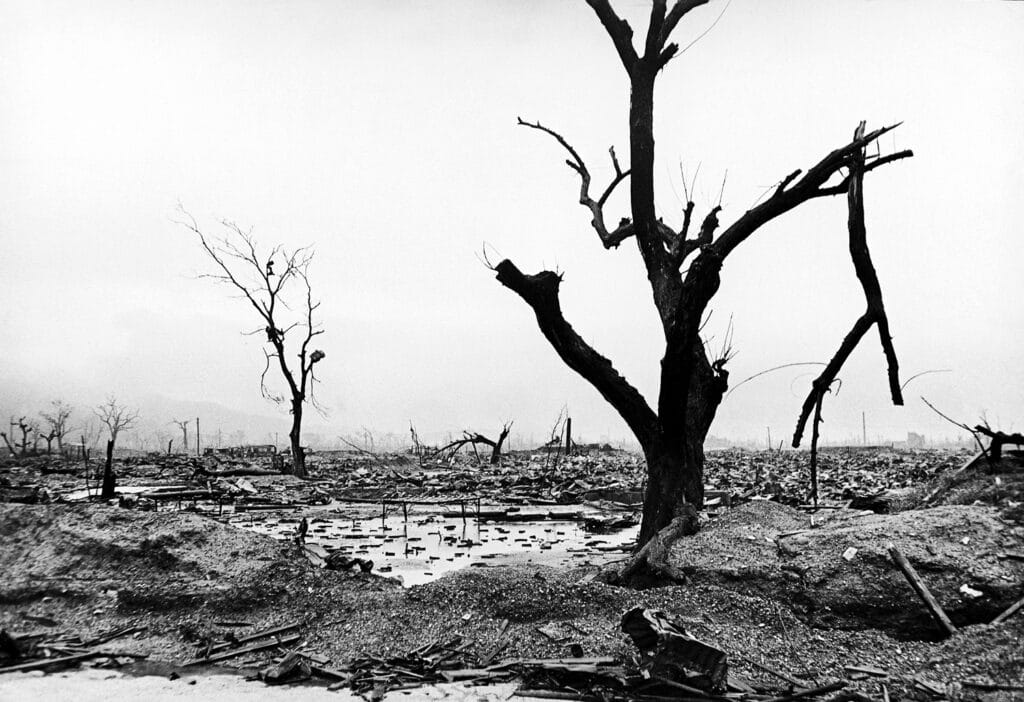
You think these weapons are safe? You think the leaders are rational? Let me remind you of Goldsboro, 1961.
A US B-52 bomber broke apart mid-air over North Carolina. It dropped two hydrogen bombs on American soil. One of them went through all but one of its arming steps. A single, low-voltage switch was the only thing that stopped a 4-megaton explosion (250 times stronger than Hiroshima) from nuking the East Coast.
That was an accident. Now imagine a stressed-out 20-year-old radar operator in 2026 seeing a “glitch” on the screen while tensions are this high. If a nuke goes off, the government won’t apologize. To save face, they will fire back.
In 1983, a Soviet officer, Stanislav Petrov, ignored a computer warning that turned out to be false. In 1995, Russia briefly mistook a scientific rocket for a nuclear threat. During the Cuban Missile Crisis, restraint — and luck — saved the world.
These weren’t victories of technology. They were moments when humans hesitated.
Today, systems are faster. Decision windows are shorter. Arms-control agreements are weaker. The room for hesitation is shrinking.
The Real Risk Isn’t Hate — It’s One Error
The biggest danger today isn’t ideology or anger.
It’s speed.
You want to kill the other one the moment you know they are about to. What if that intel was wrongly fed?
There are AI-assisted warning systems. Automated threat analysis. Leaders with minutes to decide instead of hours. Add multiple global crises, and attention gets divided.
No one has to want nuclear war. They only have to misunderstand for one moment.
The 8th Continent: No Escape in Space
We often talk about the 7 continents, but in modern warfare, Space is the 8th continent. It is the highway for destruction.
ICBMs (Intercontinental Ballistic Missiles) don’t just fly straight; they arc through space. The moment a launch is detected, the “egoistic idiots” in charge won’t hesitate to turn low-earth orbit into a debris field.
Elon Musk might dream of Mars, but if the button is pressed, the 8th continent becomes a graveyard of satellites and warheads. There is no “up” to escape to.
Then there’s Doomsday.
The Doomsday Plane’s Rare Appearance at LAX
Throughout late 2025, various E-4B airframes were tracked conducting “touch-and-go” landings and endurance drills, though these were largely confined to military airspaces and did not capture the public’s attention
But, on January 8, 2026, the internet exploded when the “Doomsday Plane” (Callsign TITAN25) was filmed landing at LAX.
The high-level curiosity for a $223 million flying fortress sighting is its design, which is to survive a nuclear electromagnetic pulse (EMP). And the tense events, like:
Venezuela: The recent capture of President Nicolás Maduro by US forces.
Iran: Escalating protests in Tehran and Trump’s “maximum pressure” warnings.
Greenland: Diplomatic friction between the US and Denmark/EU.
Moreover, historically, the most famous “emergency” sighting occurred on 9/11, when an E-4B was seen over the White House and later served as a mobile command post during the attacks.
So, Where Does That Leave Us?
We aren’t doomed yet. But we are careless. The ego often speaks louder than restraint.
The world is more fragmented than it used to be. Rules are weaker. There are countries that don’t abide by the rules that they themselves drafted. Yes, I’m talking about the US.
Nuclear war is still unlikely — but it is no longer unimaginable.
The question is whether we slow down — before one mistake of a pseudo messiah ends everything.
Nuclear Power Countries – The Club of Nine. Who Holds the Keys?
We call the nuclear power countries as the “Club of Nine.” These are the nations that hold the power to delete human history. As of 2026, the global stockpile is hovering around 12,000+ warheads.
Plus, the race to acquire the status of nuclear power country is ongoing.
The Club of Nine
Who Holds the Keys to Doomsday?
📊 Total Estimated Warheads (2026)
Source: Federation of American Scientists & SIPRI 2025/26 Estimates. Processed by anancy.in
Russia
~5,580Heavyweight champion of doomsday. Russia maintains the largest arsenal with diverse delivery systems, including hypersonic glide vehicles.
United States
~5,328The runner-up. Currently modernizing its nuclear triad with B-21 Raiders and Sentinel missiles to maintain global parity.
China
~500+Building missile silos at record pace. China aims for a 1,000-warhead arsenal by 2030 to challenge the bipolar status quo.
France
~290Independent deterrent. France maintains a sea-and-air based force designed for “final warning” strategic strikes.
United Kingdom
~225Continuous At-Sea Deterrent. Relies on four Vanguard-class submarines armed with US-made Trident II missiles.
Pakistan
~170Developing tactical (low-yield) weapons for battlefield use to counter India’s conventional military superiority.
India
~172Strategic depth. Building a triad to deter both Pakistan and China, with new MIRV capability on Agni-V missiles.
Israel
~90Opacity policy. While officially unconfirmed, Israel possesses Jericho missiles and submarine-launched cruise missiles.
North Korea
~50The wild card. Rapidly improving ICBM technology to ensure regime survival against Western pressure.
⚠️ The Watchlist: Candidates for the Club
Beyond the Nine, several nations are in a high-stakes race to achieve “Breakout Capability” or are facing internal pressure to nuclearize by 2026.
Iran
The Breakout Frontrunner
Currently holding 60% enriched uranium. Breakout time estimated at 1-2 weeks for weapon-grade material.
South Korea
The Public Demand
Over 70% of citizens now support a sovereign nuclear program due to distrust in the US nuclear umbrella.
Japan
The Turnkey Power
Possesses a massive plutonium stockpile. Technically capable of producing a warhead in under 12 months if the political decision is made.
Other notable mentions: Saudi Arabia (seeks parity with Iran), Turkey (strategic autonomy ambitions), and Germany (growing debate on Euro-deterrence).
Analysis by anancy.in Strategic Intelligence Division.
The Aftermath of a Nuclear War: It’s Not the Fire, It’s the Ice
Fear sells, but this isn’t a sales pitch. It’s a reality check.
Turn on the news. The US has just pulled a stunt in Venezuela—capturing Maduro in a raid that feels more like a Hollywood script than foreign policy.
Meanwhile, Putin is watching from the Kremlin, likely wondering if he should finally take the gloves off in Ukraine and try the same with Zelensky. Xi Jinping is speeding up on his Taiwan plan. And Kim Jong Un? He’s just itching for attention.
The geopolitical temperature isn’t just rising; the thermometer has shattered.
So, let’s say the worst happens. Trump, Putin, or a glitch triggers a full exchange. You might be worried about being vaporized. Don’t be. Being vaporized is the lucky way out.
The real horror starts the day after the nuclear war. More on this in my next piece.
-> Why Hunger, Not Fire, is the Real Threat After Nuclear War?
Disclaimer:
This article analyzes current geopolitical trends and does not predict or advocate conflict. It aims to explain why global risk perceptions are changing.
References: 9 Warning Signs of Nuclear War
Wikipedia: 2026 US Intervention in Venezuela
The Times of India: Why Exxon thinks Venezuela is ‘uninvestable’
The Hindu: Meloni rules out US military move on Greenland
Economic Times: What makes Doomsday Plane special and why was it spotted at LAX?
DW News: Lukashenko: Russia has deployed hypersonic Oreshnik to Belarus